Stereo Mixing Basics
How To Mix Stereo In DAW
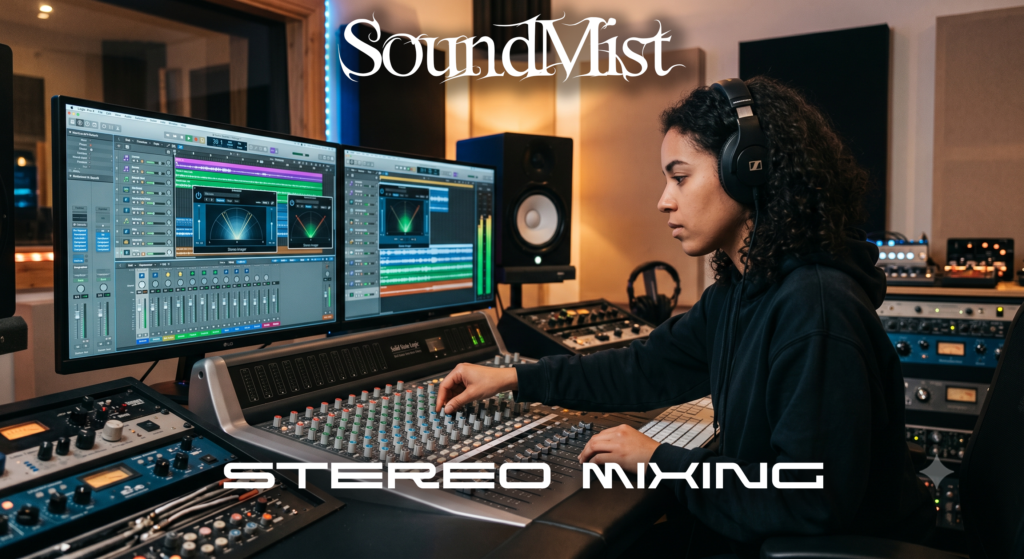
Stereo mixing is the foundation of modern music production. Whether you are producing beats, recording vocals, or mastering a track, understanding how to mix in stereo ensures
your music translates well across all playback systems.
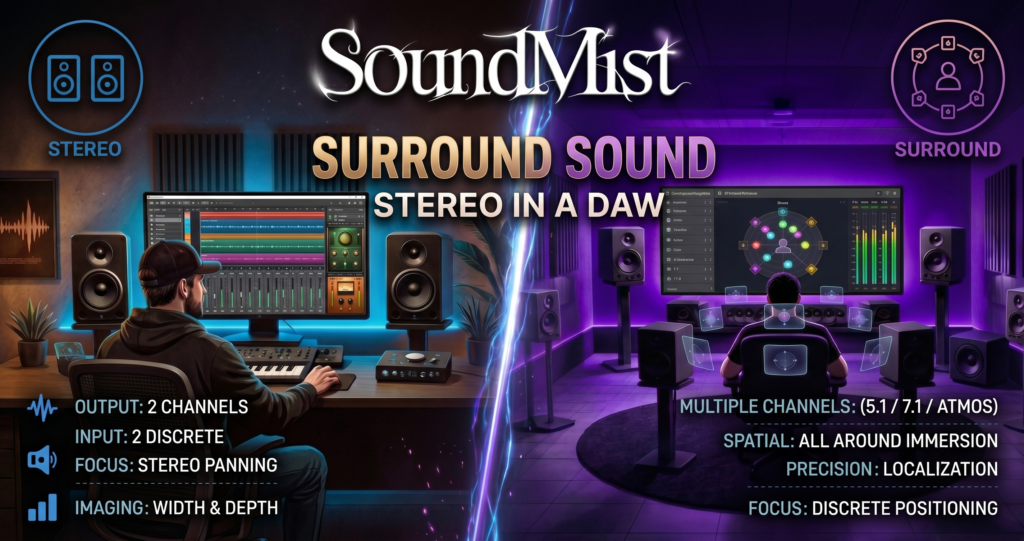
At its core, stereo audio uses two channels: left and right. The goal of mixing in stereo is to create a sense of width, balance, and depth so each element has its own space.
Start with panning. Kick drums and bass are usually centered, while instruments like guitars, synths, and hi-hats can be spread across the stereo field. This creates separation and avoids frequency clashes.
Next, focus on EQ and frequency balance. Each instrument should occupy its own frequency range. For example, remove low-end frequencies from vocals to make room for bass
elements.
Reverb and delay help create depth. Short reverbs keep elements upfront, while longer reverbs push them further back in the mix.
Compression controls dynamics and keeps levels consistent, especially for vocals and drums.
A key tip is to check your mix in mono occasionally. This ensures your stereo mix will still sound good on devices with limited playback capabilities.
For a broader comparison with immersive formats, read: https://soundmist.com/surround-sound-vs-stereo-daw
Mastering stereo mixing is essential before exploring more advanced formats like surround sound or Dolby Atmos.
Stereo Mixing Basics Read More »